As someone who hits the slopes over 20 times a year and has tackled snowboarding at altitudes exceeding 2,000 meters, I’ve tested nearly 10 different action cameras over the seasons. I don’t just use them for “cool shots”—I use them to analyze and fine-tune my movements through video playback.
If you’re planning to buy your first ski camera or upgrade for the 2026 season, this guide is written from a practical skier’s perspective. Today, the market is a “three-way competition” between DJI, Insta360, and GoPro.
How do you choose based on your skiing style? Whether you want effortless third-person panoramas or ultimate POV stability, let’s dive into the best gear for the snow.
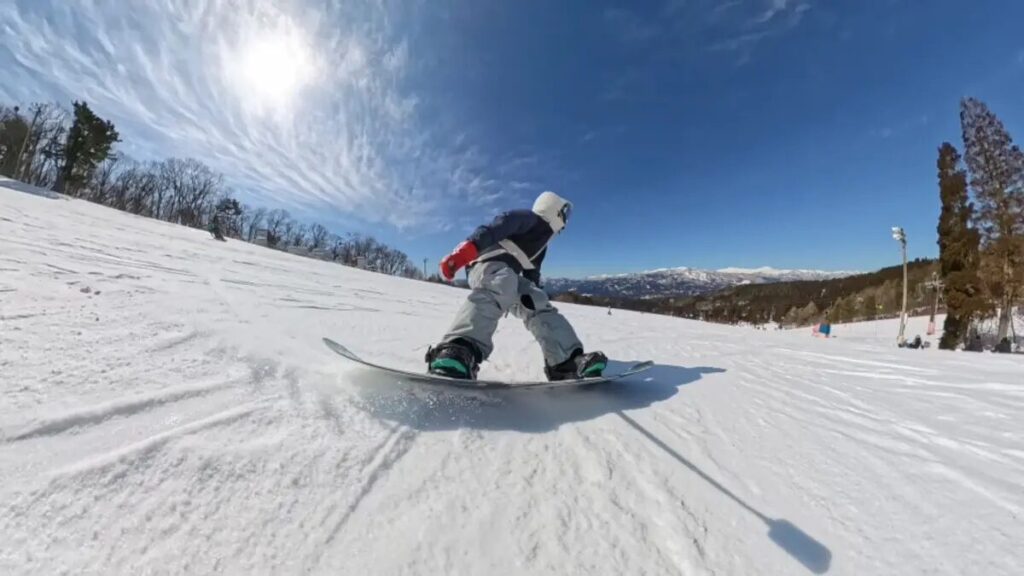
How to Choose the Best Ski or Snowboard Camera
But after years of riding and testing multiple cameras on real slopes, I can tell you those are just baseline requirements—not what actually determines whether you capture great footage.
For serious riders—especially intermediate and advanced skiers or snowboarders—the best snowboard or ski camera is the one that works with your riding, not against it.
What Actually Matters on the Slopes
- A 360° camera lets you focus on riding instead of framing
- Lightweight design matters more than specs
- 4K+ resolution is already more than enough in daylight snow
- Reliable waterproofing for snow and meltwater
- Removable lens guards + Quick-release mounting for fast angle changes
- Long battery life with cold-weather performance
Why 360 Cameras Are Often the Best Ski & Snowboard Cameras
On the mountain, your attention should be on your line—not on your camera angle.
That’s why, for most riders, a 360 camera is the most practical ski or snowboard camera you can buy.
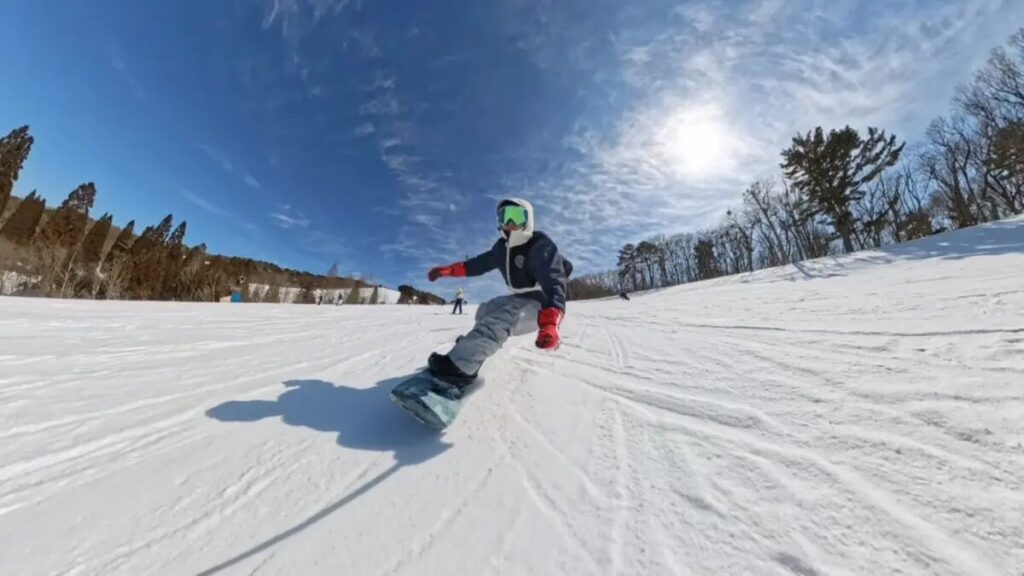
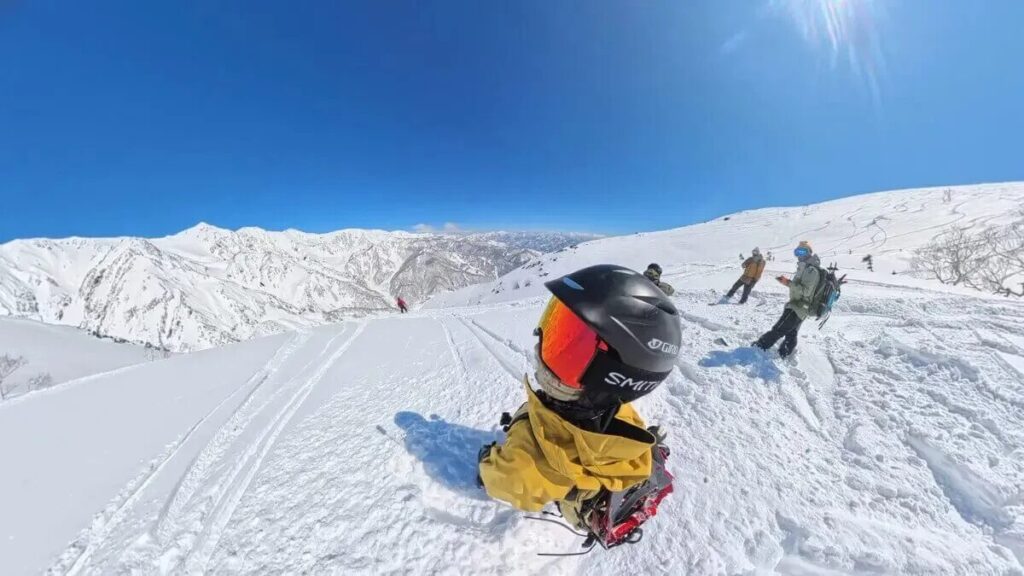
Instead of worrying about composition, you simply ride and record. Because the camera captures everything around you, you can reframe shots later in editing. Many models even hide the selfie stick automatically, creating a drone-like third-person perspective without extra gear.
Traditional action cameras—even with wide lenses and strong stabilization—still require careful aiming. If your angle is slightly off, part of your movement may be cut off or missed entirely.
With a 360 camera:
- you shoot first
- frame later
- never miss the moment
That workflow advantage is why experienced riders increasingly prefer them.
Top 360° Camera for 2026
Currently, the newest 360 cameras on the market mainly come from Insta360, DJI, and GoPro, and the 360-camera category itself was pioneered by Insta360.
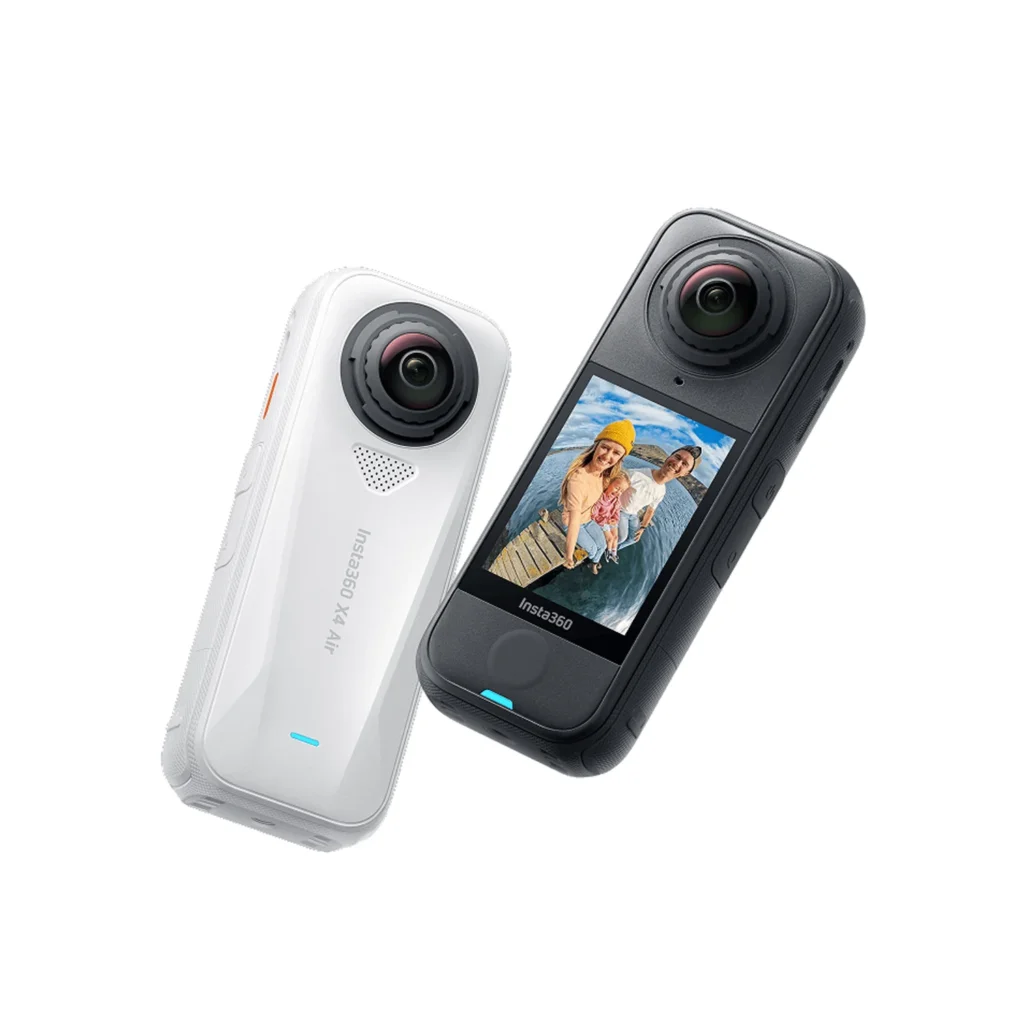

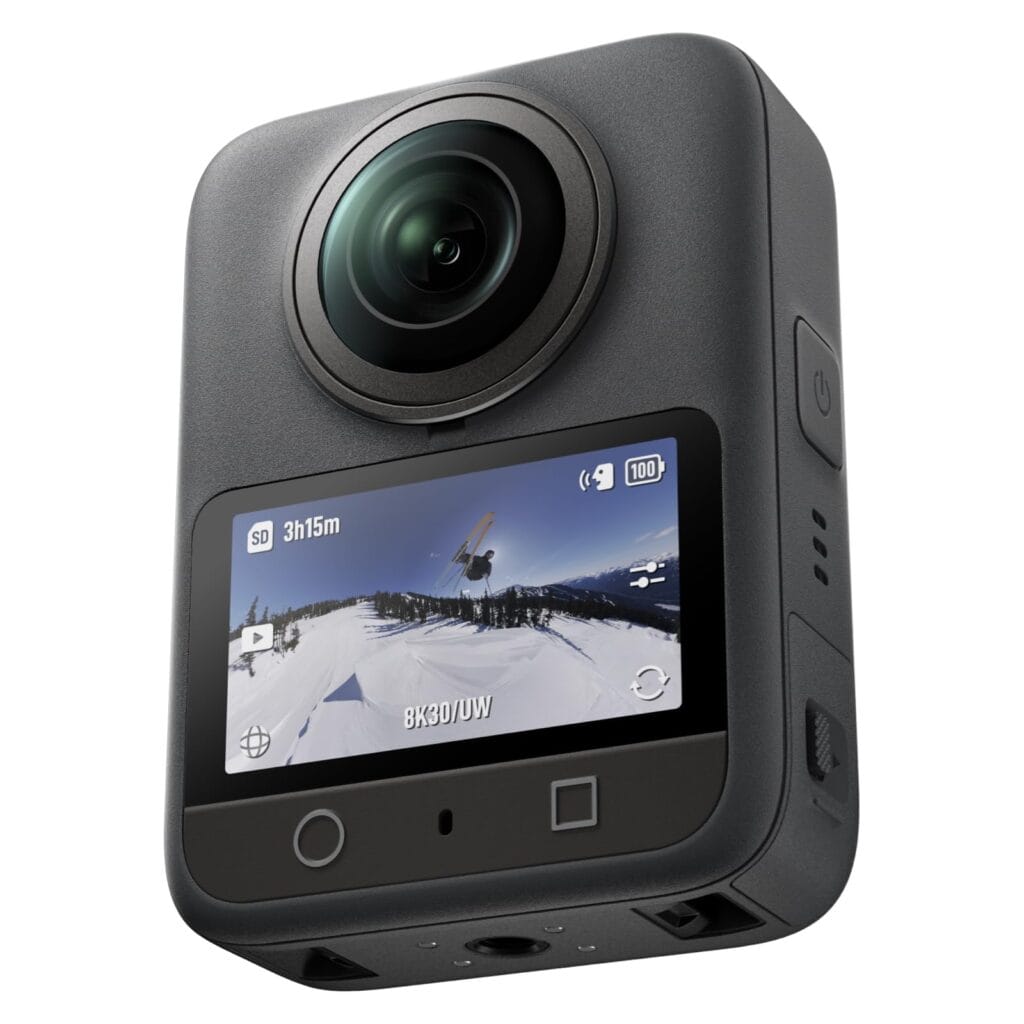
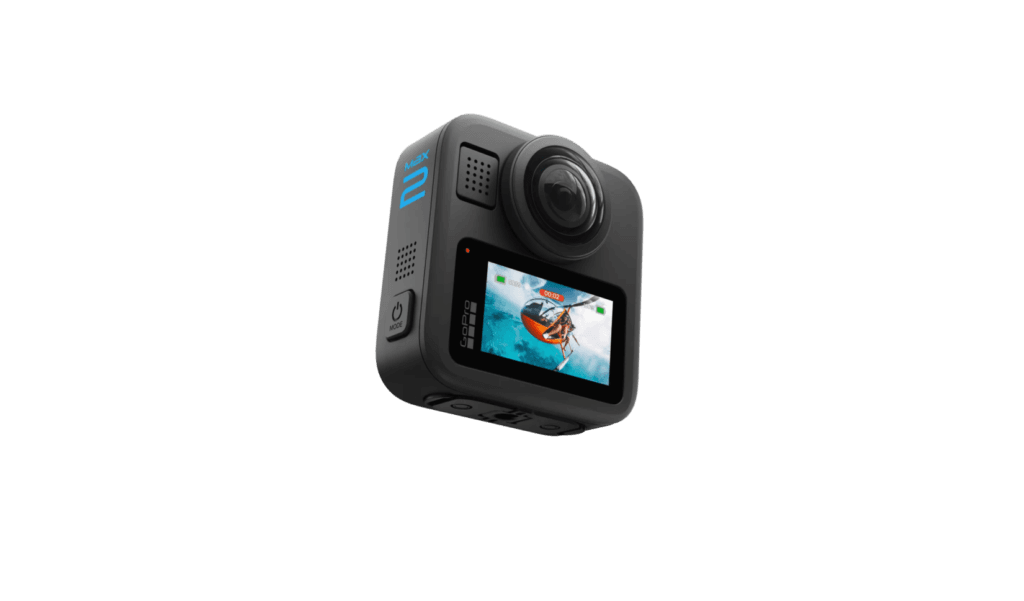
360° Panoramic vs. Traditional: The “No-Brainer” Choice
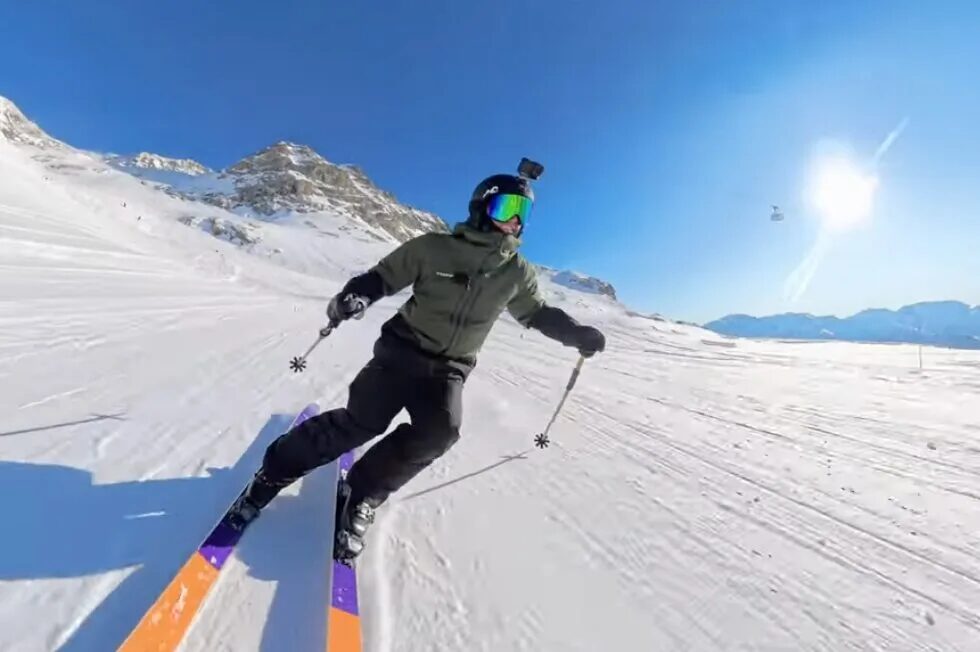
Using a 360° camera means you only need to point the selfie stick in your general direction. You’ll never have to worry about being out of frame because the camera captures everything. Advanced algorithms even scrub the selfie stick from your footage, giving you that iconic “drone-follow” look without the flight permits.
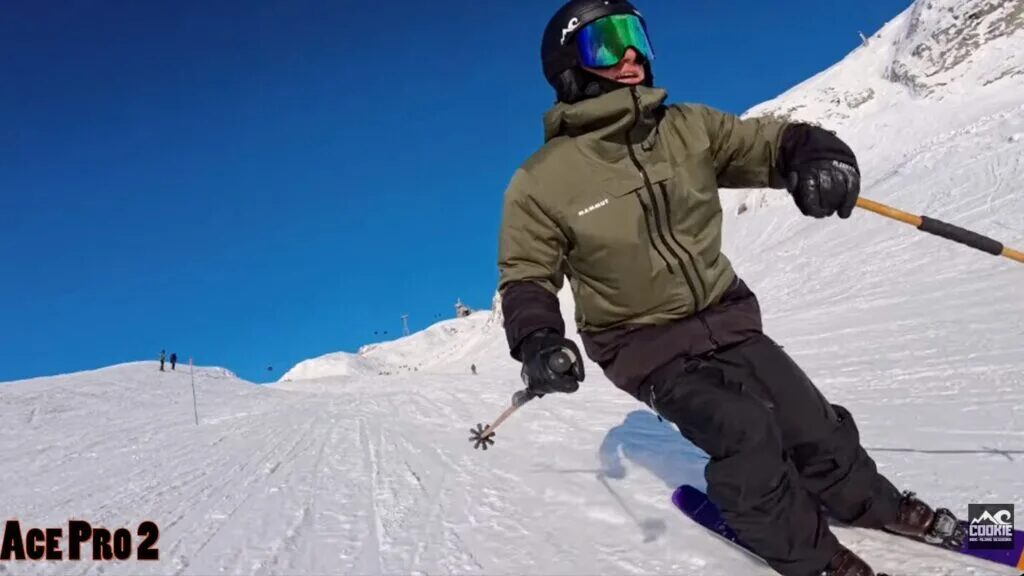
Traditional wide angle cameras, even flagship models like the Ace Pro 2, require constant attention to framing. If your positioning is off by just a few degrees, your best tricks might end up partially off-screen. A 360° camera eliminates that stress, letting you focus 100% on your line.
Weight Matters More Than Image Quality for Snow Sports
Unlike most filming scenarios, weight is one of the most important factors when choosing a ski or snowboard camera.
Why?
Because when mounted on a selfie stick, the camera’s weight is amplified by leverage and wind resistance. Even a 10–30g difference can noticeably affect stability and arm fatigue during long runs.
After years of testing different setups, here’s the most practical formula:
Choose the lightest camera you trust + the shortest stick you’ll actually carry.
| X4 Air | X5 | Osmo 360 | X4 | X3 | ONE X2 | |
|---|---|---|---|---|---|---|
| Weights | 165g | 198g | 183g | 203g | 180g | 149g |
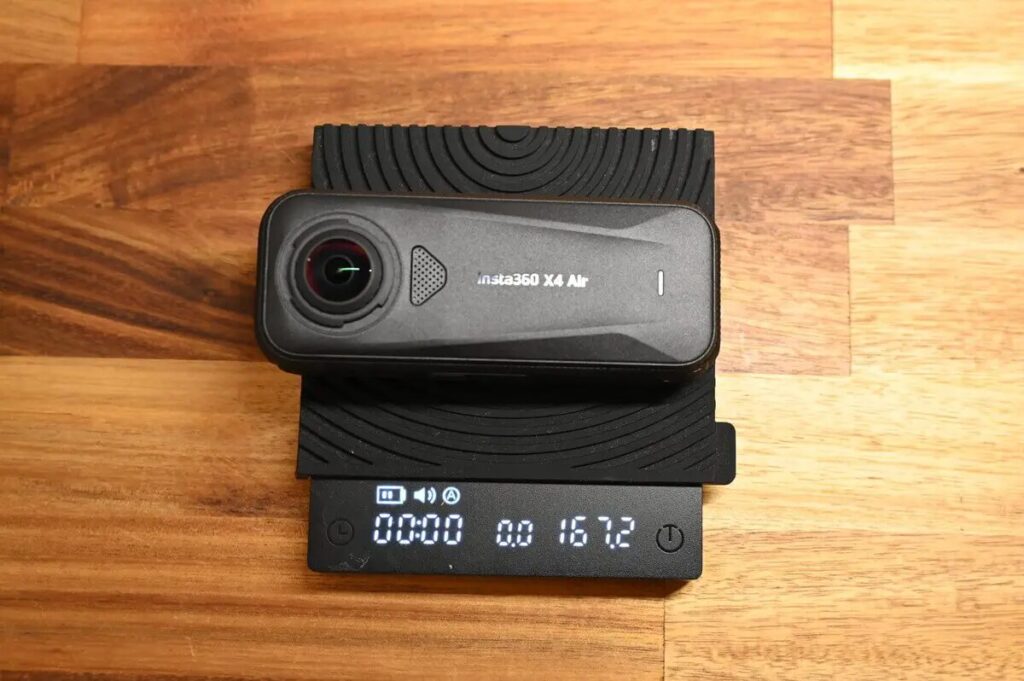
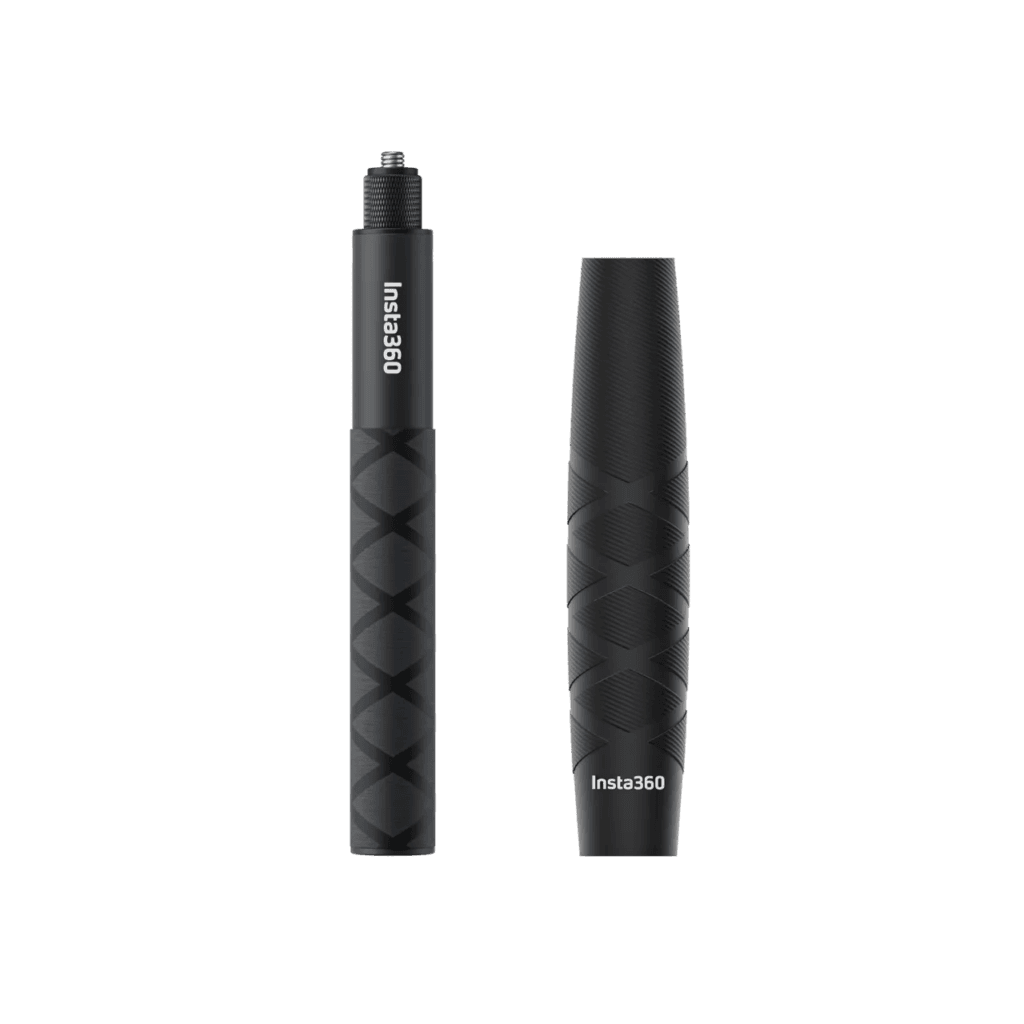
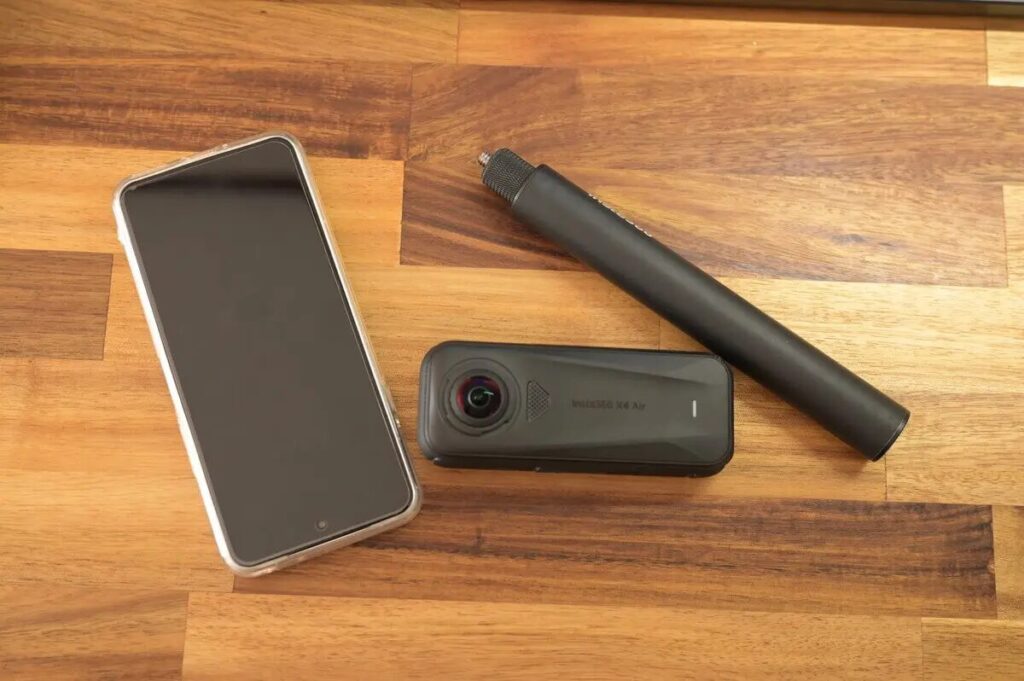
For skiing specifically, I strongly recommend an 85cm invisible selfie stick. It folds small enough to fit into a jacket pocket and creates minimal torque while riding, making it the easiest setup to control at speed.
Best Selfie Stick Length for Ski Filming
The 114cm selfie stick is a favorite for creators who want that expansive, cinematic “third-person” look. Its extra length effectively minimizes “fisheye” distortion around the head and feet, making the mountain scenery look truly epic. However, it comes with a trade-off: portability. Even when collapsed, it’s often too long to fit comfortably in a standard ski backpack or jacket pocket.
For a practical, all-day setup, I recommend a different path: Go light or go home. While I use the 114cm pole for general travel, I strictly stick to poles under 85cm when skiing. On the slopes, the best gear is the gear you can actually reach. If it’s too clunky to pull out, you’ll miss the shot. For the ultimate balance of weight, value, and pocket-sized convenience, the Insta360 X4 Air paired with an 85cm stick is currently the gold standard.
Snow Conditions Reduce the Need for Extreme Image Quality
If your primary playground is the ski resort, here is a piece of advice that might save you hundreds: Stop chasing the most expensive, top-tier flagship cameras. In the bright glare of the slopes, 4K resolution is already plenty. The spec you actually need to watch is weight.
It sounds counterintuitive, but the logic is simple: high-altitude snow is nature’s best softbox. The natural light at ski resorts acts as a massive filter, providing bright, clean tones that make almost any sensor look good.
Unlike the complex shadows of a forest or the tricky dynamic range of a sunset, skiing footage is dominated by a simple, high-key palette—pure white snow and blue skies. This environment is “easy mode” for camera sensors.
Instead of blindly paying for “extreme” image quality you’ll rarely notice on the slopes, a smarter, more cost-effective move is to prioritize cold-resistance, weight, and intuitive operation.
Cold-Resistant Batteries Are Essential for Ski Cameras
Currently, the ski camera market is a three-way race between Insta360, DJI, and GoPro. However, when the temperature drops, only two truly cross the finish line.
Insta360 & DJI: Their flagship models (like the X5, X4 Air, and Osmo Action series) are engineered for the extreme. Rated to withstand temperatures as low as -20°C (-4°F), they are the gold standard for high-altitude skiing.
GoPro: Surprisingly, GoPro lags behind here. Even with the “Enduro” low-temperature battery, its official rating only covers down to -10°C (14°F). If you’re heading to the frigid slopes of Hokkaido or the Rockies, a GoPro might suffer from sudden shutdowns or rapid battery drain just when the light gets perfect.
Lens Protection: Why a Replaceable Guard is a Life Saver
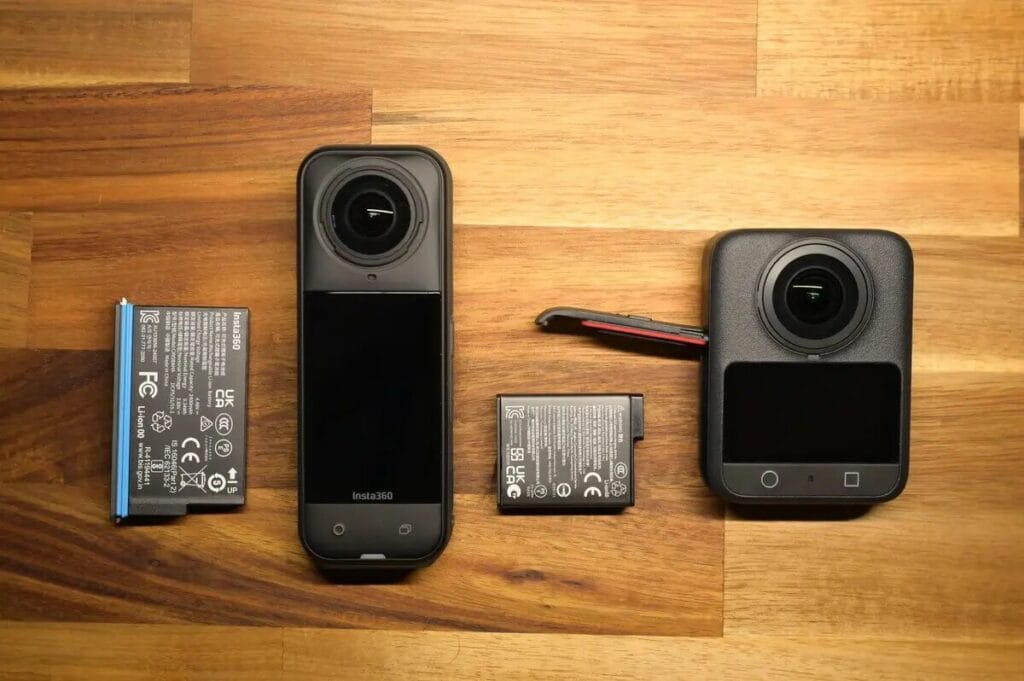
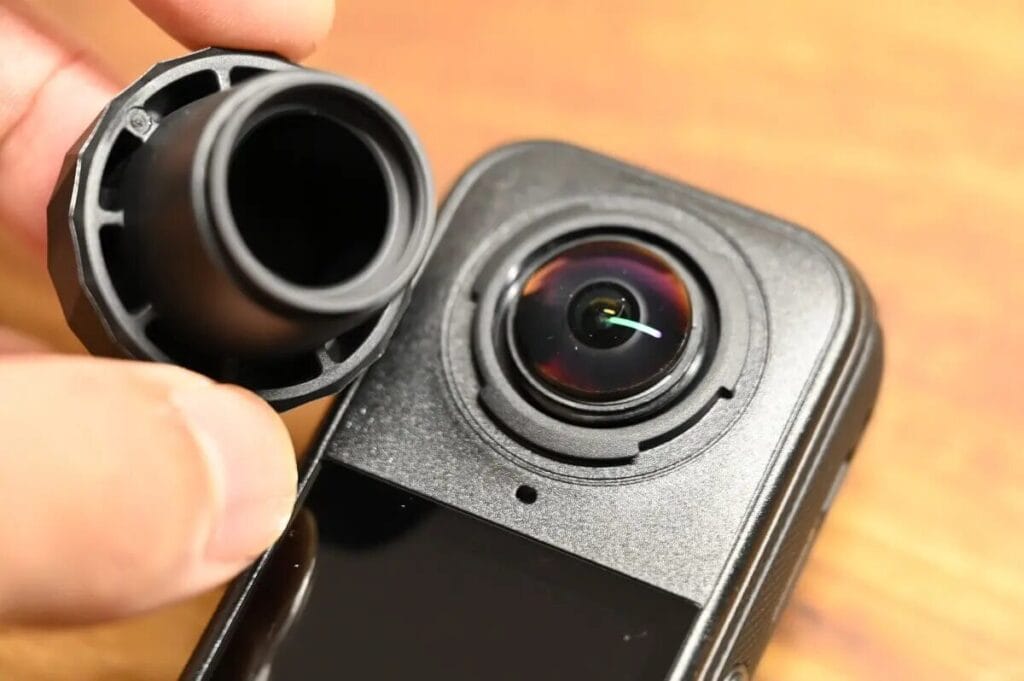
Whether you’re carving at high speeds or hitting features in the park, your camera is in constant danger. A single wipeout or a brush against icy crust can easily scratch your lens. If your camera has a “fixed” lens design, even a minor scuff can render the entire unit useless, forcing you to pay for an expensive professional repair.
This is where designs like the Insta360 X4 Air shine. It features a user-replaceable lens protector that you can swap out in seconds. Trust me, I’ve been there—scratching a lens mid-trip is heartbreaking. With a removable guard, a scratch doesn’t end your shoot; you just pop on a new protector and you’re back in action. It’s the ultimate insurance policy for aggressive skiers.
Cold-Weather Battery Life
At -20°C (-4°F), a reliable ski camera must sustain at least 60 minutes of continuous recording. While DJI, GoPro, and Insta360 all hit this benchmark, DJI & Insta360 takes it a step further, it features a game-changing fast-charge capability.
Just a quick “pit stop” at the rest station is enough to juice up your gear, so your camera is always ready to drop in when you are.
Best Ski & Snowboard Cameras 2026: Top 5 Picks
Insta360 X4 Air
If you want the best ski or snowboard camera that balances performance, weight, and real-world usability, the Insta360 X4 Air is currently the smartest choice for most riders.
Its biggest advantage is the dual-lens 360 design, which lets you shoot first and frame later, so you can focus entirely on riding instead of adjusting angles. At only 165g, it’s significantly lighter than most competitors, reducing arm fatigue and improving stability when mounted on a selfie stick.
- 33g lighter than Insta360 X5
- 23g lighter than DJI Osmo 360
It also stands out with AI auto-tracking, −20°C cold-resistant battery performance, and a replaceable lens design, making it one of the most practical cameras for real mountain conditions.
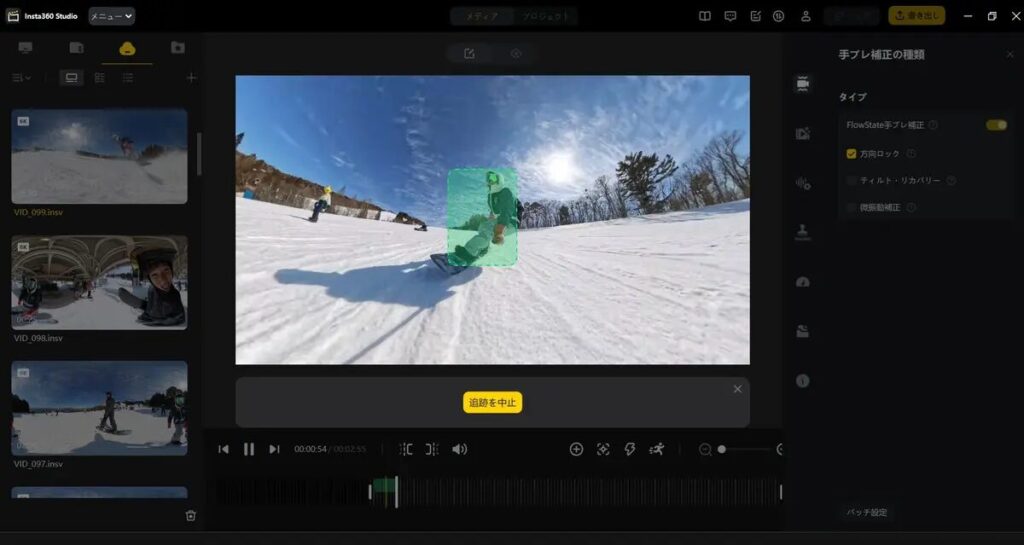
Unless you specifically need extreme slow motion or night shooting performance, the X4 Air delivers the best balance of portability, image quality, and usability for snow sports filming.
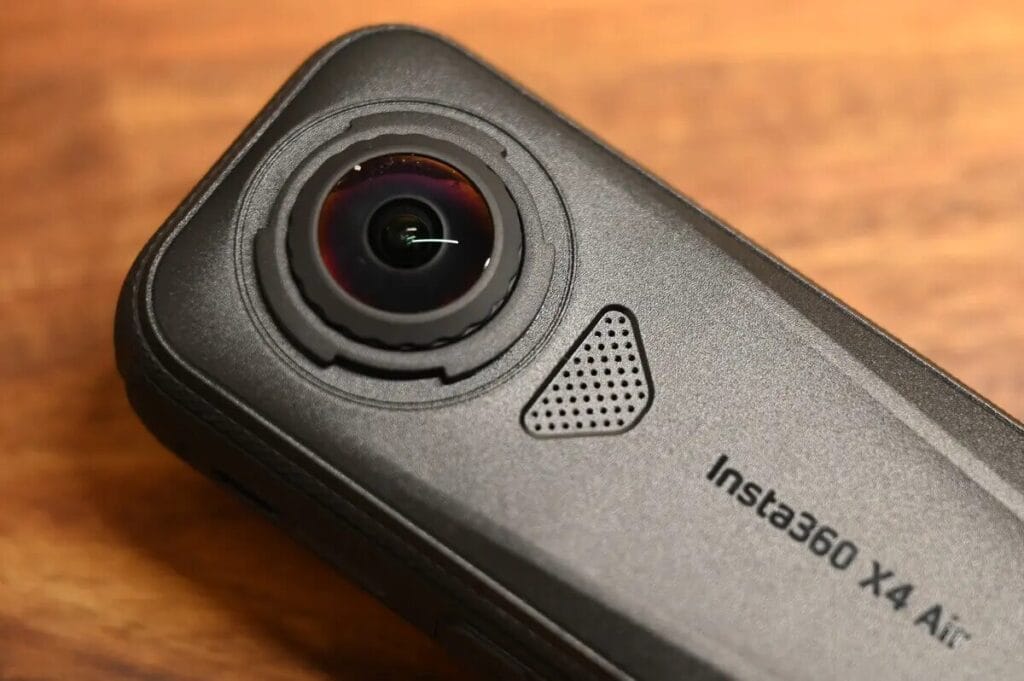
- 360°Shooting
- Extremely lightweight design
- Reliable cold-weather battery performance
- Replaceable lens design
- AI tracking
For riders who need ultra-slow-motion capture for tricks, spins, or big-air analysis, cameras like the Insta360 X5 or DJI Osmo 360—which support higher frame-rate recording—may be the better choice. However, for the majority of skiers, the X4 Air strikes the ideal balance of performance, usability, and real-world practicality.
DJI Osmo 360
While the Insta360 X4 Air is my top overall recommendation, the DJI Osmo 360 is a stronger choice for riders who prioritize low-light shooting or need higher slow-motion capability for tricks and jump analysis. Its night performance is noticeably better, and it’s also about 15g lighter than the X5, which matters more than you might think when filming on a selfie stick during long runs.
A standout bonus is its built-in 105GB internal storage, allowing roughly one hour of 6K recording—a lifesaver if you ever forget your SD card on the mountain.
That said, it lacks replaceable lenses, which means even minor scratches could require repair. For riders who value durability and easy maintenance, that’s one limitation worth considering.
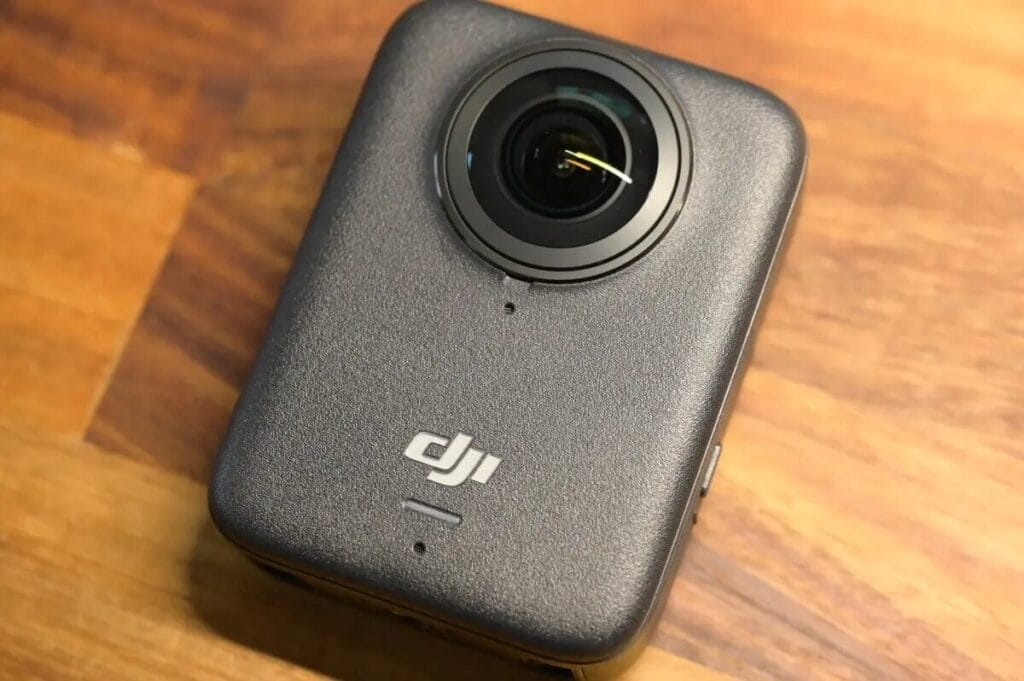
- Better Low-Light Performance: Produces clearer footage in night or low-light riding conditions.
- Higher Frame Rates: Ideal for slow-motion trick analysis and action replay.
- Built-in Storage: Internal memory lets you record even if you forget your SD card.
Insta360 X5
If you want the best possible image quality in any lighting condition, the Insta360 X5 is the top choice. Powered by its AI Tri-Core Imaging System, it delivers sharper detail and better highlight control than the X4 Air, even on bright, reflective snow slopes.
It also supports 4K 120fps recording, enabling smooth 4× slow motion—essential for capturing tricks, spins, and aerial moves with precision. Like the X4 Air, it features a replaceable lens design, so damage during intense shooting won’t end your session.
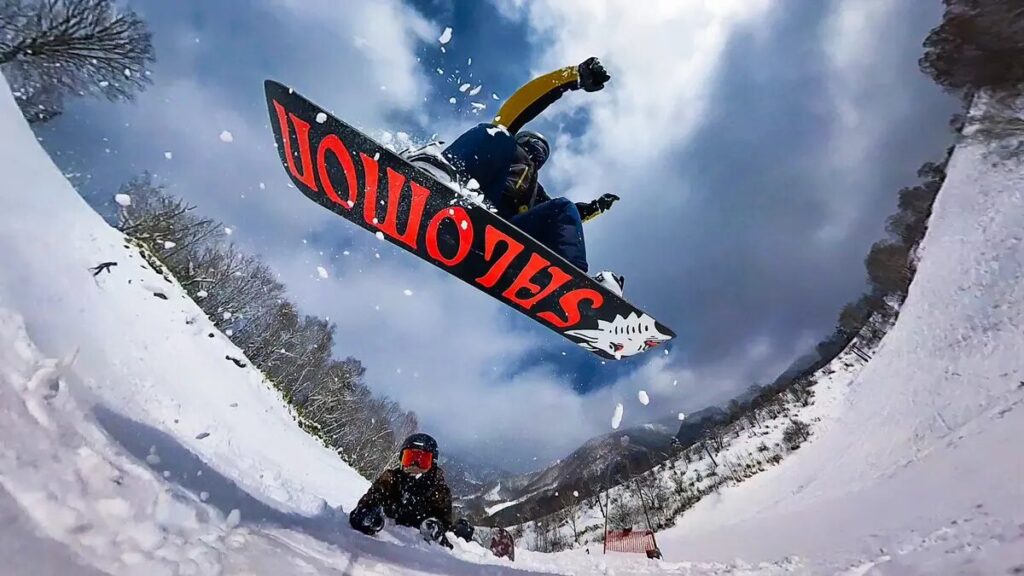
That said, while 360 cameras offer unmatched flexibility, cropped 16:9 footage can’t always match the raw detail of native wide-angle cameras. Still, for riders who want the highest overall image performance in a 360 system, the X5 remains the strongest pick.
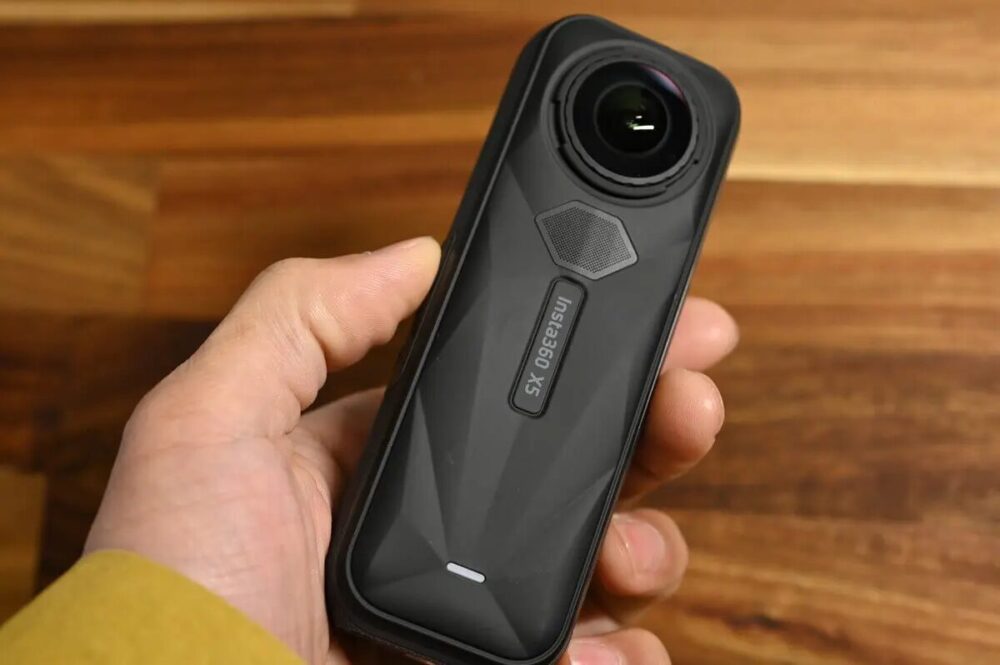
- Top-Tier Image Quality: Delivers outstanding detail and dynamic range in both bright snow and backlit scenes.
- 4K 120fps Slow Motion: Perfect for capturing tricks, spins, and fast action with smooth playback.
Replaceable Lens Design: Easy to swap lenses after scratches or impacts. - Flagship Performance: Built for riders who want the highest-quality footage without compromise.
Next, I’ll introduce two wide-angle action cameras that are well suited for skiing and snowboarding. The advantage of a wide-angle camera is its versatility—it’s not limited to snow sports alone. If you need a single camera that can handle multiple scenarios such as skiing, hiking, and road cycling, a wide-angle action camera can actually be an excellent all-around choice.
DJI Osmo Action 6
If you want the best wide-angle camera for skiing or snowboarding, the DJI Osmo Action 6 is my top pick. It combines strong battery life, ultra-wide shooting capability, and class-leading stabilization in one rugged body.
Its −20°C cold-resistant battery delivers up to 4 hours of runtime, and with 80% fast charge in just 22 minutes, it’s ready to go again after a quick break. The optional 182° ultra-wide lens makes selfie shots far more immersive, easily capturing your arms, skis, and the surrounding mountain scenery.
Powered by RockSteady 4.0 stabilization, it reduces shake by up to 60%, keeping footage smooth even during high-speed descents or rough terrain. For riders who want reliable performance and maximum versatility, it’s one of the most practical choices available.
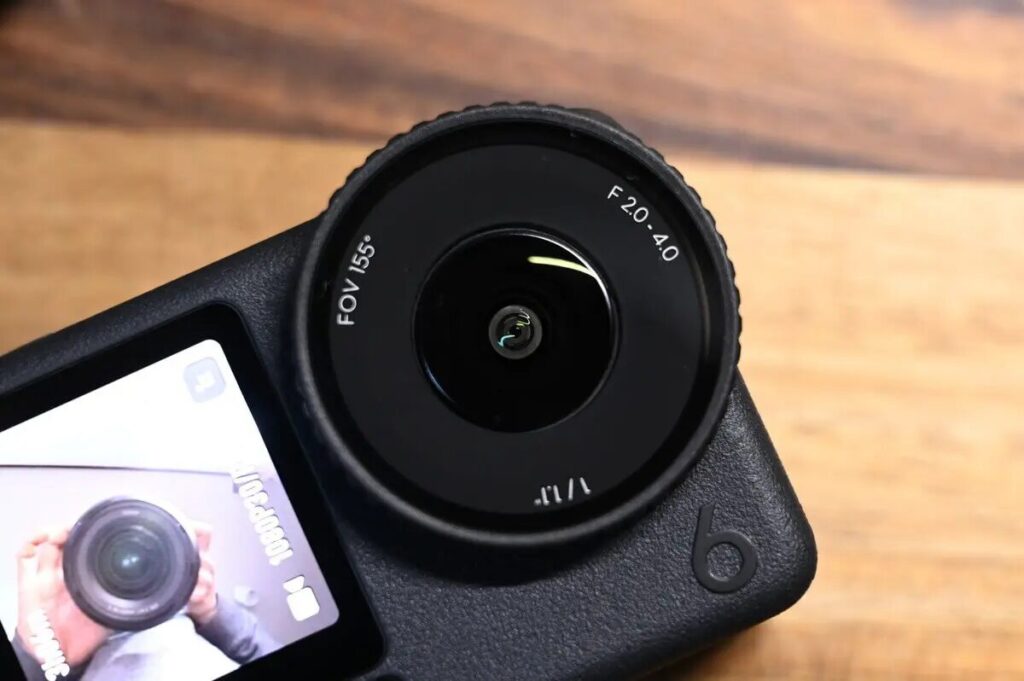
- Excellent Stabilization
- Long Battery Life
- Ultra-Wide Perspective
Insta360 Ace Pro 2
The biggest strength of the Insta360 Ace Pro 2 is its near-perfect versatility. If you want one camera that handles skiing, daily vlogging, and high-quality video with ease, it’s an excellent choice.
If image quality is your absolute top priority and you don’t care much about other factors, then the Ace Pro 2 is unquestionably the best choice.
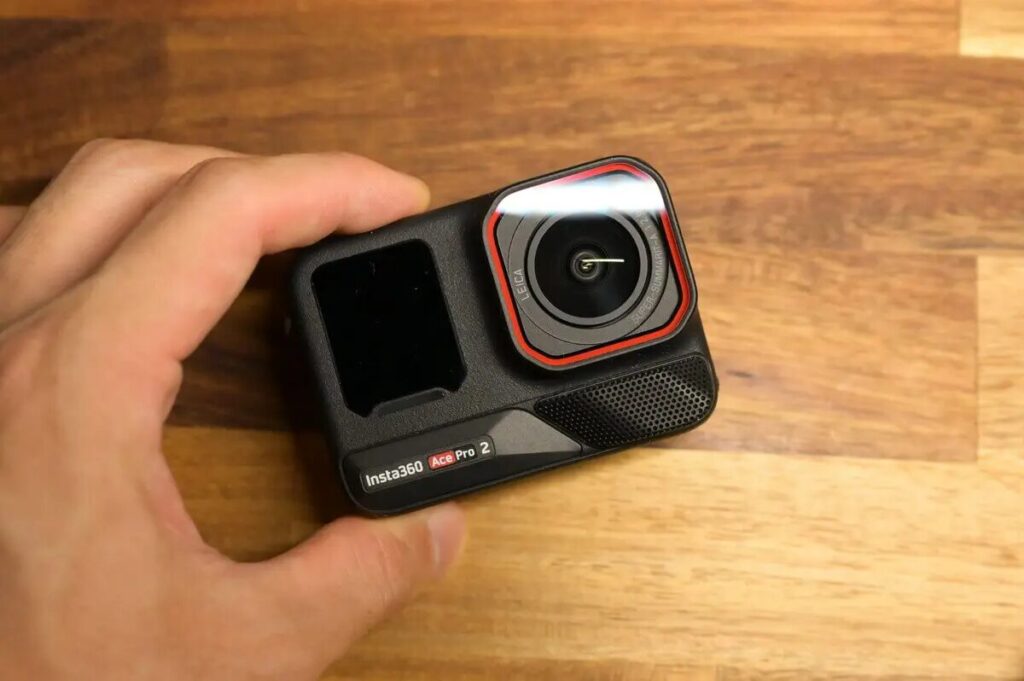
- Flip Screen: Makes framing effortless for talking shots and self-recording.
- Dual-Purpose Design: Works as both a vlog camera and a powerful action cam for helmets, chest mounts, or ski setups.
- 8K Image Quality: Captures ultra-detailed footage with rich color and strong dynamic range.
Must-Have Accessories for Your Ski Camera
Choosing the right camera is only half the battle; your accessories determine the perspectives you can capture. Here are the essentials, categorized by shooting style:
The “Third-Person” Kit (The Drone Look)
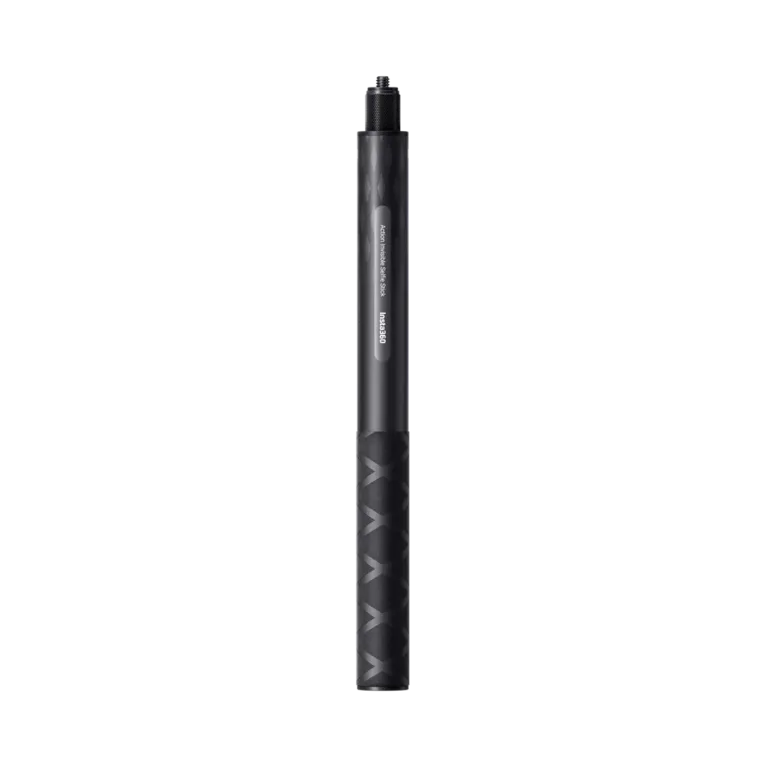
Invisible Selfie Stick: An absolute must-have. High-quality carbon fiber sticks disappear in 360° footage, making it look like a drone is following you.
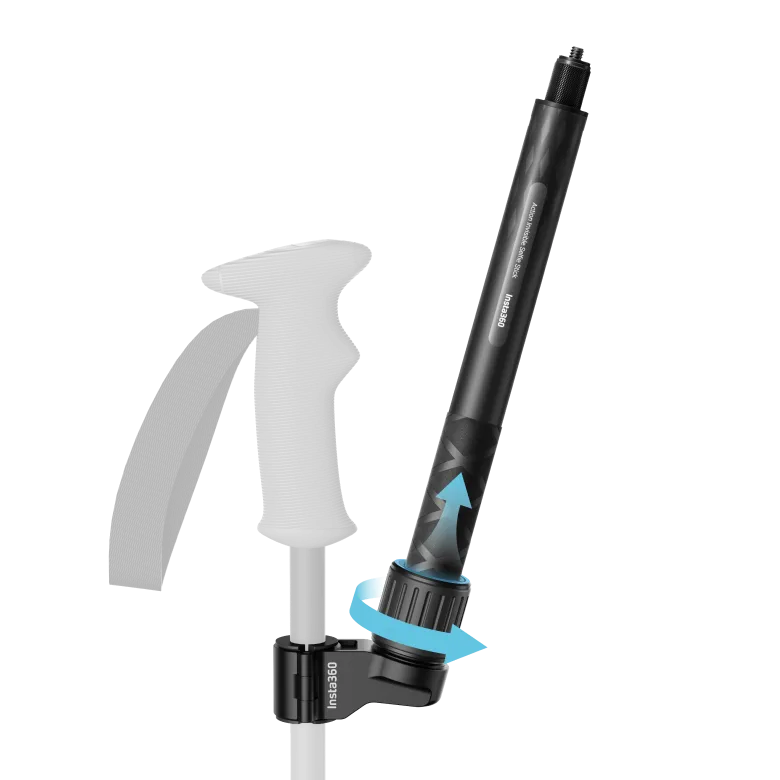
Ski Pole Mount: Attaches your camera directly to your pole for a unique, close-up perspective of your carving.
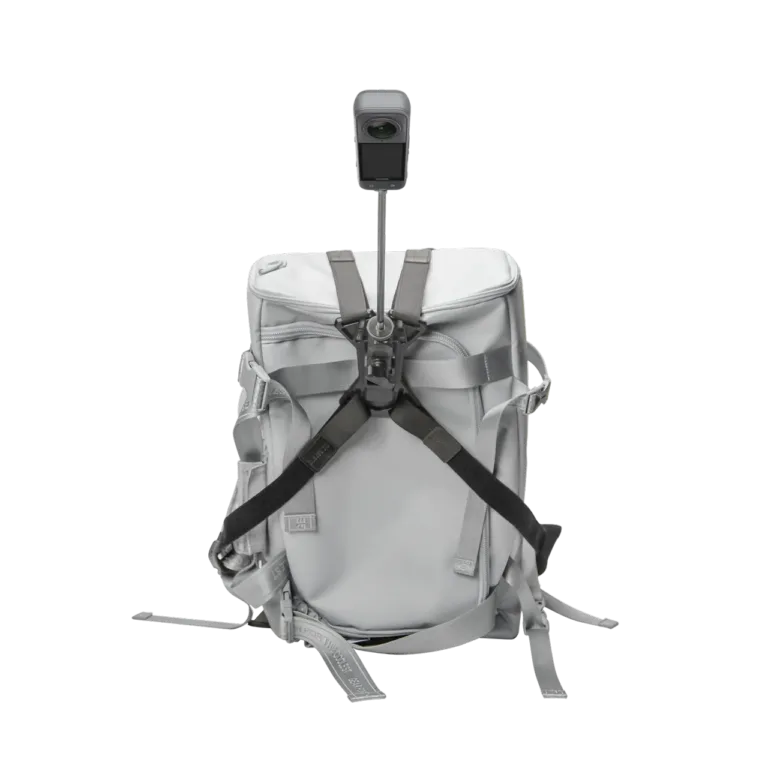
Third-Person Backpack Mount: Perfect for long-distance touring, giving you a steady “over-the-shoulder” view without holding a stick.
The POV Kit (Immersive Action)
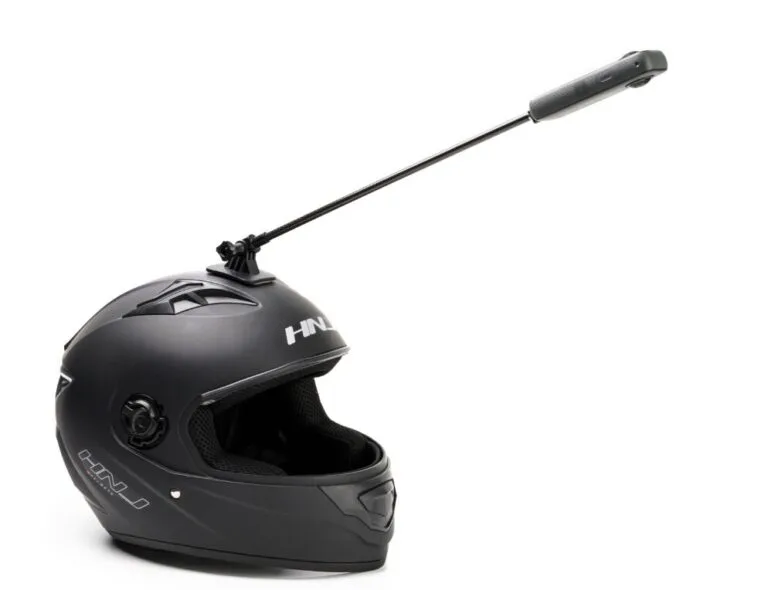
Unicorn Helmet Mount: Positions the camera extended from your forehead for a bird’s-eye view of your path.
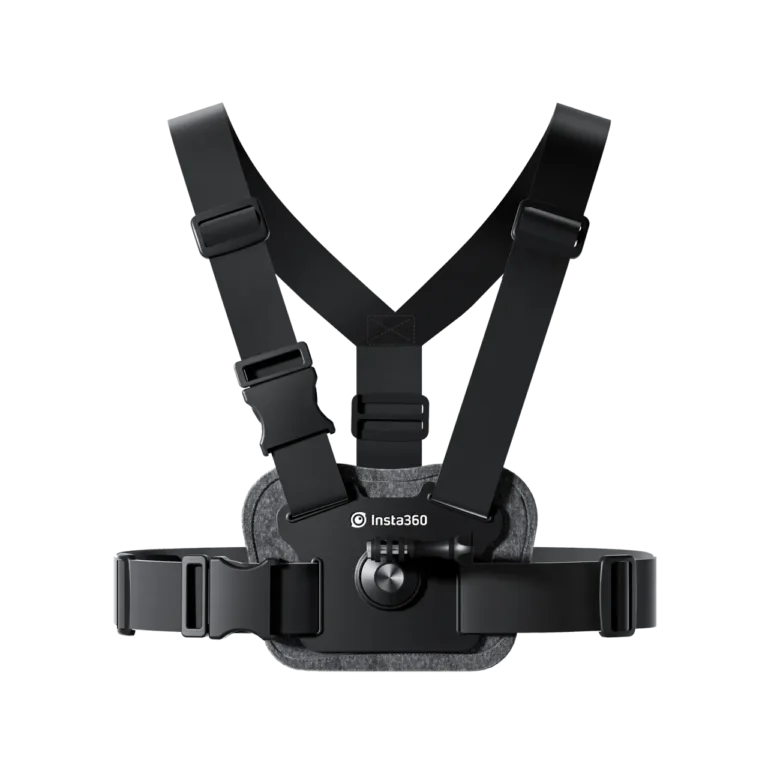
Chest Strap: Provides the most immersive POV, capturing your arms and skis in the frame.
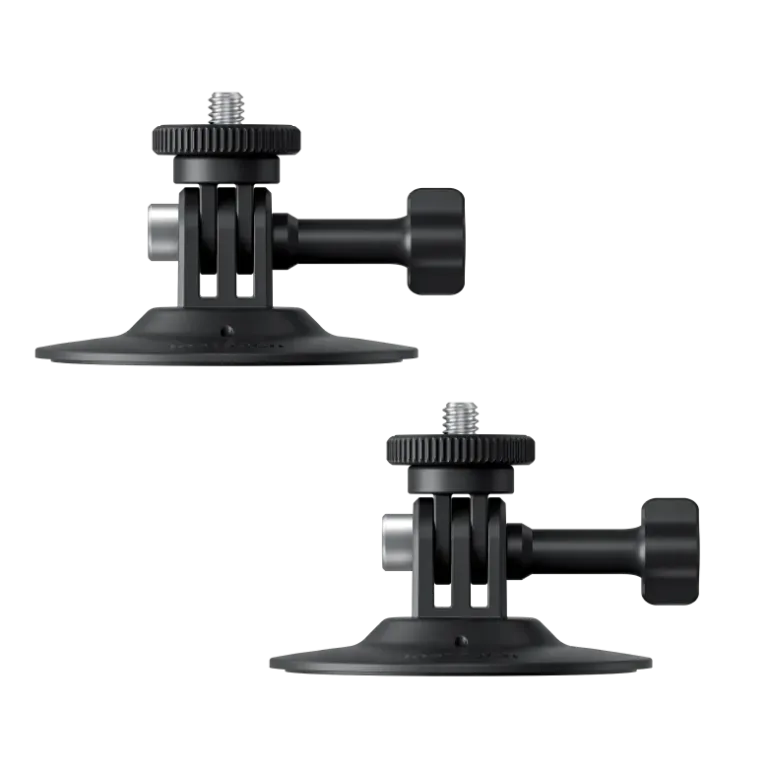
Flexible Adhesive Base: The most versatile way to secure your camera to any curved helmet surface.
Performance & Protection
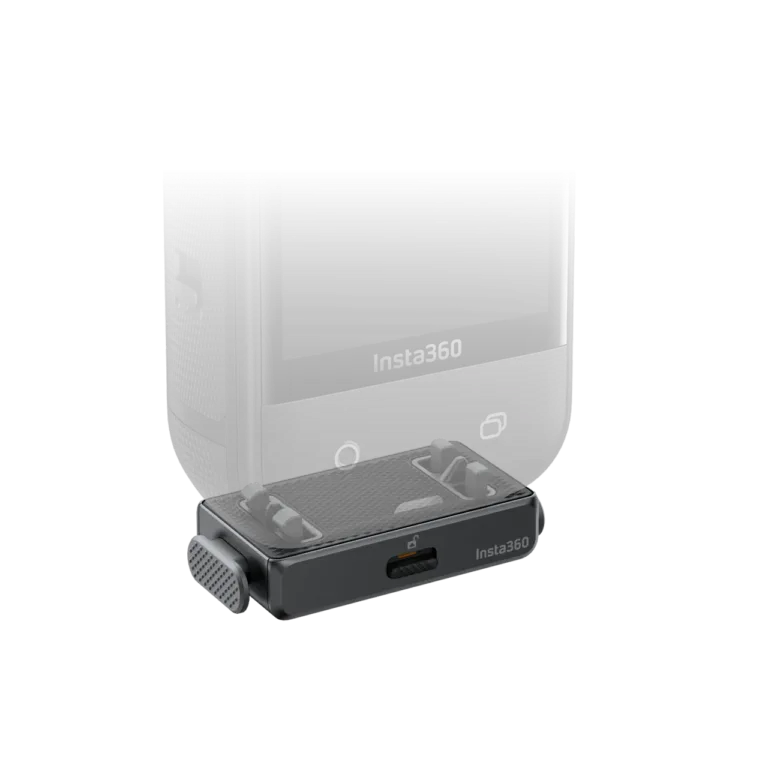
Quick-Release Mount: It allows you to mount your camera on 1/4″ tripods, selfie sticks and more in seconds.
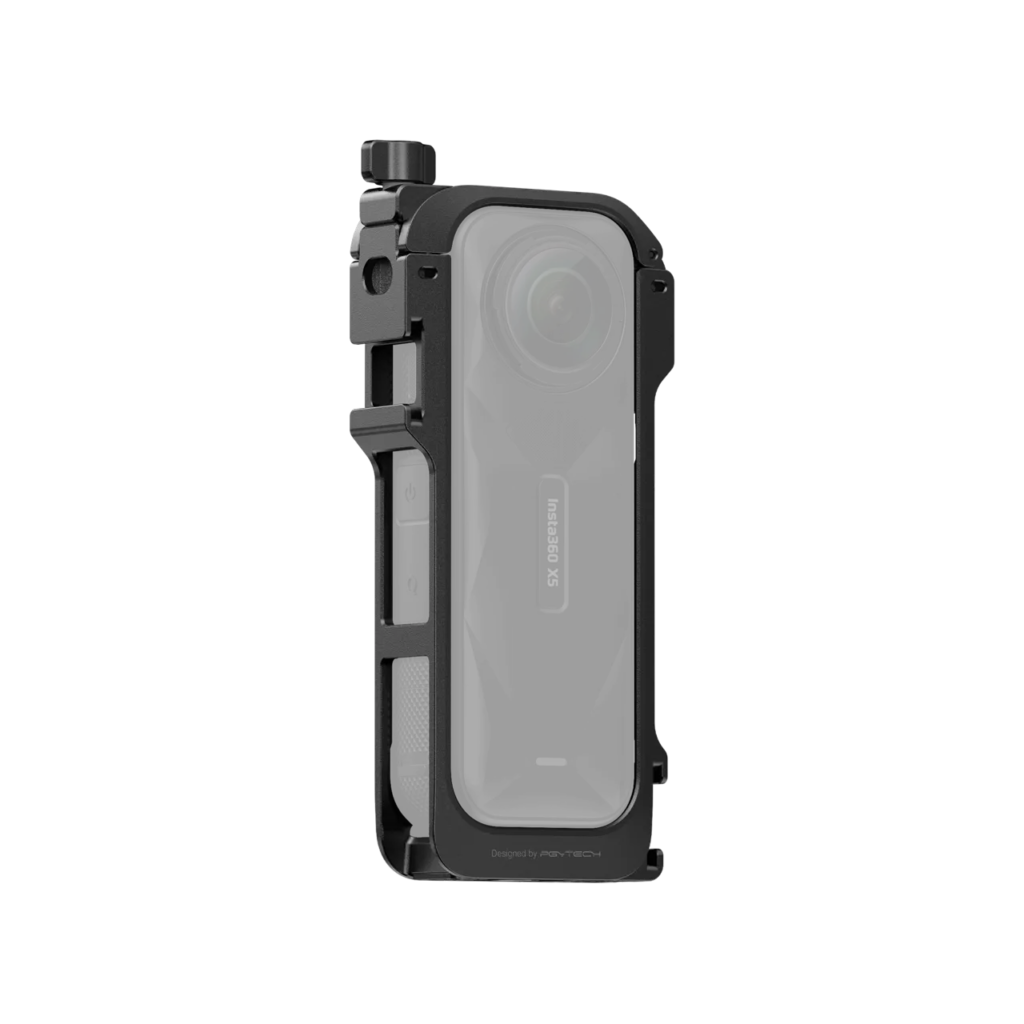
Utility Frame: Protects the camera body from side impacts and icy crust.
High-Speed Memory Card: Ensure you use a V30 or higher microSD card to handle high-bitrate 4K/8K snow footage.
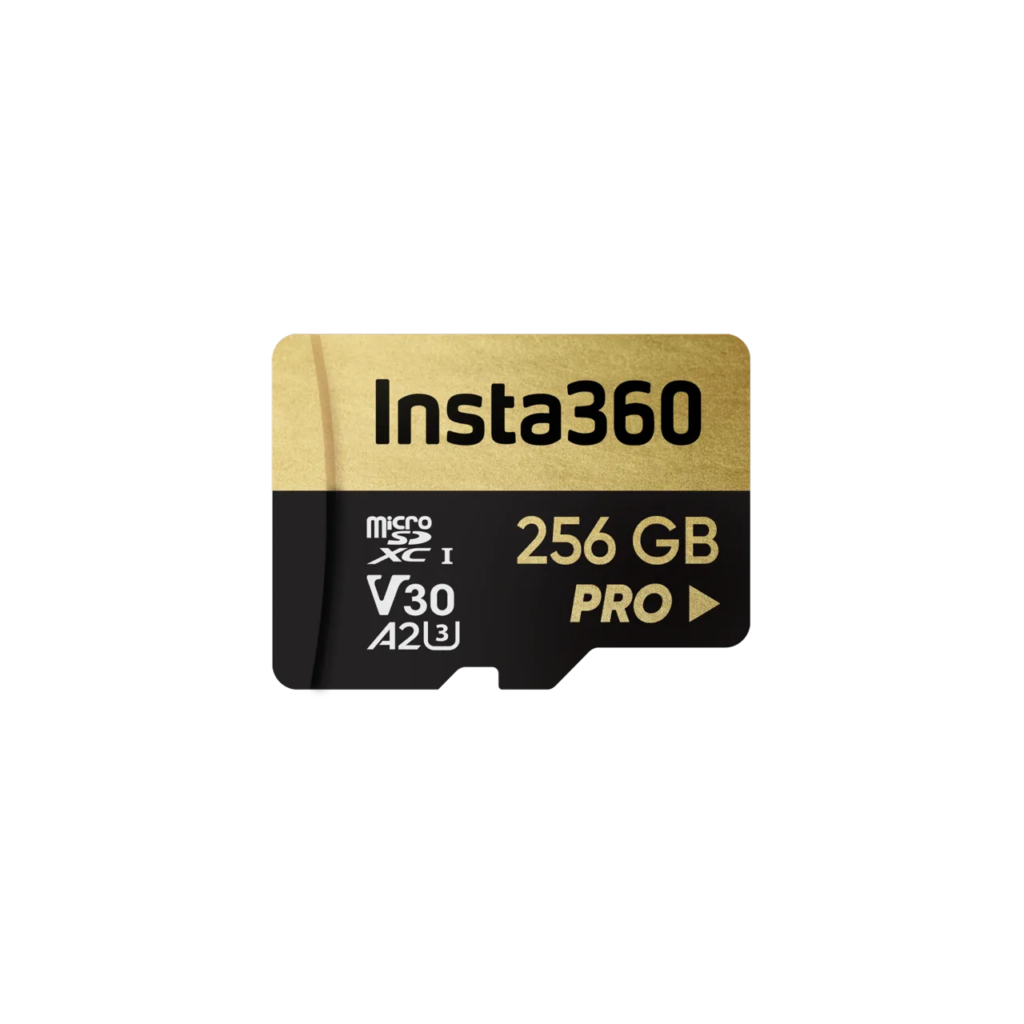
Pro Tip: Get the “Ski Bundle” to Save Time If you’re overwhelmed by the options, most brands offer a comprehensive Ski Kit. These bundles usually include the core essentials (like the selfie stick and basic mounts). From there, you just need to add a few specialized items like a helmet bracket, chest mount, and a high-end memory card to complete your setup.
Conclusion
Choosing the right ski or snowboard camera ultimately comes down to how and where you ride. If you want effortless shooting with maximum flexibility, a lightweight 360 camera is the smartest choice. If your priority is ultimate image quality or advanced slow motion for tricks and jumps, a flagship wide-angle action camera will suit you better.
The good news is that today’s market offers more strong options than ever. With models like the Insta360 X4 Air, Insta360 X5, DJI Osmo 360, and Osmo Action 6 competing closely, riders can now choose gear that truly matches their shooting style instead of settling for a one-size-fits-all solution.
If you’re planning to gear up for this season, I recommend checking official stores or trusted retailers first. DJI models tend to keep stable pricing year-round, while Insta360 often releases seasonal promotions on ski bundles during peak winter periods. Catching one of those limited-time deals can make a noticeable difference in overall value—especially if you’re planning to pick up accessories alongside your camera.
Pick the camera that fits your riding style, mount it up, drop in, and let the lens capture every line, carve, and jump. The mountain is waiting.